Julio Llamazares · Travel literature
El río del olvido
The veteran of Ranedo and the name of his garden: Red Forest.
On his journey along the Curueño, Llamazares talks to a former Blue Division member whose house has a Russian name. The location, his background and the sign connect this portrait with Alfredo González Díez.
The clues that point to Alfredo
The man lives in Ranedo, is a retired soldier and Blue Division veteran, and shows the traveller a sign he translates as “Red Forest”. Alfredo’s family biography and the photograph of his house share these same features.
This identification is very likely, although Llamazares does not give his name. The photograph documents the sign “KRASNYJ BOR / ROJO BOSQUE” at the garden entrance. The date of the photograph has not been established.
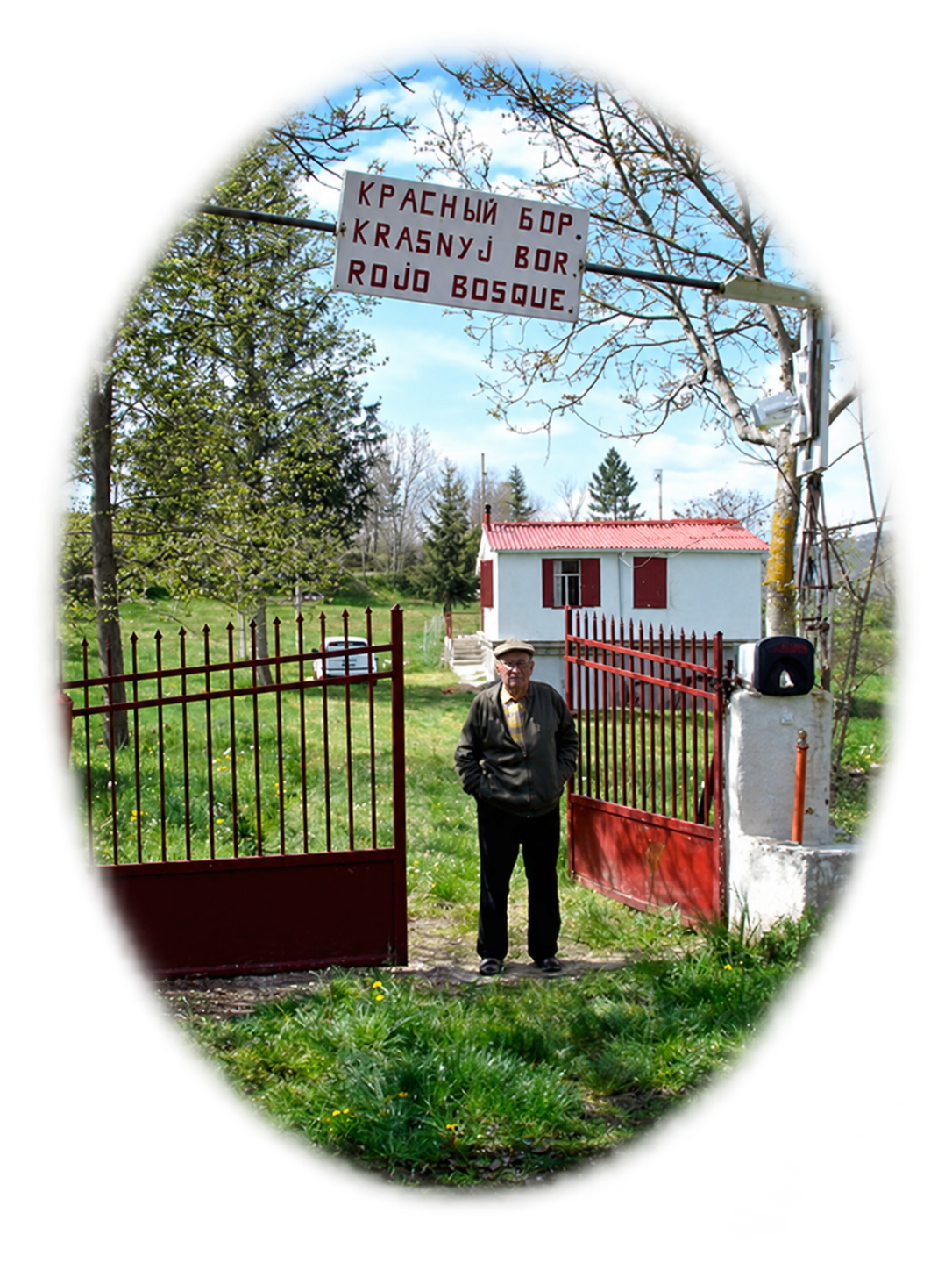
La fronda del Bosque Rojo
Excerpt from the encounter with the veteran, from his appearance on the path to the translation of the sign. The narrative then turns to another neighbour, Basilio Sierra.
The traveller, however, was spotted some time ago. At the entrance to the village, at the top of the slope, a man is waiting for him in the middle of the path.
“Well? Out for a stroll?” he asks.
“Depends how you look at it,” says the traveller, panting from the effort.
The man looks at him quite openly. A retired soldier and survivor of the Blue Division, he says he has climbed many slopes in his life, and so now looks at him without any concealment or consideration.
“At your age,” he scolds him, “I used to go up that slope on one leg, carrying two backpacks like yours.”
And to prove it, he tells him about some of the long marches he apparently had to make through snow and blizzards during his heroic years in the Blue Division:
“Once, we walked sixty kilometres in a single night. Another time, we went from Berlin to the border in twenty-four hours. But the worst,” he says, “was when we entered Russia. Walking through the snow all the time, at twenty or thirty degrees below zero. Even to sleep—just think about what I’m telling you—we had to keep walking so as not to freeze to death.”
“Well, how lucky,” says the traveller, who is more interested in finding out what is written in red letters on a board above the garden gate.
“It’s in Russian,” the Blue Division veteran explains, noticing his curiosity.
“In Russian?”
“In Russian, yes, sir.”
“And what does it say?” asks the traveller, whose astonishment has grown at the same rate as the Blue Division veteran’s satisfaction.
“‘Red Forest’,” he says, proud of his knowledge.
El puente de Valdepiélago
The opening of the section returns to the man and turns the name of his house into an image of the landscape at dusk.
Dusk is falling when the traveller leaves Ranedo, leaving the old mayor absorbed in memories of hunting and the Blue Division veteran standing in the middle of the path, waiting for another traveller to come up the slope so he can tell him about his military exploits and translate the name of his house from Russian into Spanish. The Blue Division veteran is right. Perhaps without realising it, he has managed to sum up in just two words what will take the traveller a whole page of his notebook tomorrow: over the mountains of Aviados, the sun is setting, and its last rays cross the valley, setting the trees ablaze and turning the whole village into an immense red forest.
On the outskirts of Ranedo, opposite the chapel of San Roque—the village’s patron saint—several children are playing football in a meadow, entirely oblivious to the beauty of the blaze. Like any proper contest between neighbours, the match already has a fire of its own. For now, Ranedo is beating Valdepiélago seven to five, and everything suggests the contest will end in a fight:
La terraza de la fonda Orejas
As he writes his notes, the traveller recalls the veteran among the people he has met.
When he finishes his coffee, the traveller lights a cigarette and takes out his notebook to jot down some notes while digesting breakfast. He has had no time to do so since yesterday morning at Casa Chana. But sitting in the corner of the terrace, in the shade of the lime trees planted a century ago by the current owner’s grandfather, he finds it easy to concentrate. Little by little, his notebook fills with the owners of La Dama de Arintero, the Señorito de Otero, the Blue Division veteran, Basilio Sierra, Domingo the foundling, Aunt Lina, blind Goro, Florencio, Quitapenas, Ovidio and his lantern, and, of course, the washerwomen of Aviados and the conductor of the coal railway. As in children’s stories, the people the traveller met along the way yesterday—and those he merely thought he saw in his sleep—come back to life, leaping from his eyes to the notebook and from the notebook to the acacias and chairs. The traveller is no longer alone on the terrace with the cats. Although the summer visitors are still in bed and Señora Magdalena has gone to the kitchen to prepare their breakfast for when they get up, he is not alone: besides the cats, the people he met yesterday and those he thought he saw in his sleep have returned to keep him company in the corner of the terrace where he is now writing, wrapped in cigarette smoke and lulled by the shade of the lime trees planted a century ago by Magdalena’s grandfather…
The same name in Alegres soldados
In the notes to chapter XXIV, “Tangos”, Alfredo writes “Krasnyj Bor. Красный Бор” and explains its meaning: “In Spanish, Red Forest”. This equivalence connects the sign in the photograph with the conversation recounted by Llamazares.
Alfredo also cites Llamazares
In chapter XXXV, “Women in War”, the notes about the Lady of Arintero include this reference:
River Curueño, “Río del olvido”, a book by Julio LLAMAZARES, author of “El techo del mundo”, with exterior scenes filmed in the mountains of Alto Curueño.
The Lady of Arintero and the memory of the Curueño villages are further connections between the two books. This citation shows that Alfredo mentions the work; it does not by itself prove the man’s identity.
The page numbers shown refer to positions within each chapter’s file, not the printed pagination.
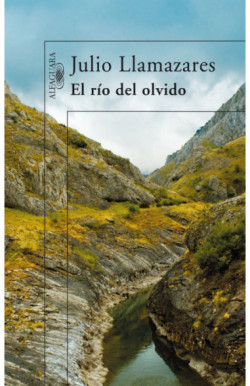
Julio Llamazares
El río del olvido
First published in 1990. The consulted text includes the preface to the 2006 reissue and recalls the journey made in 1981.
The official Penguin Libros listing provides the cover, synopsis and reading options for the electronic edition, ISBN 9788420498539.